
Howard County Previous Residents Sources
Think of the trail in two layers. Ownership records follow the land itself. Household records follow the people who lived there. SDAT, Howard GIS, and the most recent deed establish the modern parcel, its legal description, and a book/page reference. Older deed books, plats, historical voter rolls, census schedules, maps, permits, probate files, obituaries, and the Miller Branch and Historical Society holdings carry the search deeper. The best source shifts with the era. A recorded sale tells you who transferred an interest, while a census or directory entry is more likely to name the people actually connected to an address at a point in time.
| Source | Years It Covers | Where Held | What It Shows |
|---|---|---|---|
| Howard land records | Nineteenth century onward; online cutoff not verified | MDLandRec, Clerk, and Archives indices | Recorded parties, legal descriptions, liens, and prior references |
| Plat references | 1823-1897 index series; later plat series also listed | Maryland State Archives Guide, Plats.net, and GIS | Lot, block, subdivision, road, and boundary geometry |
| Historical voter material | 1865-1940 in the HCGS reference; 1865-1866 MSA list | HCHS and Maryland State Archives | Registration or polling presence |
| Federal census | Public through 1950 | NARA, Census sources, and authorized research platforms | Household composition, relationship, age, and birthplace |
| Sanborn maps and permits | Sanborn examples 1887, 1894, and 1910; permit start not stated | LOC, MSA, HCHS, and Howard DILP | Structure context, alteration clues, and site dates |
Resist guessing a former name. Lock in the parcel identifiers first. The map, grid, parcel, lot, subdivision, plat, and legal description survive changes in street spelling and postal-place names far better than a bare address alone.
Howard County Previous Residents Index
MDLandRec is the main online door for a Howard deed search. Its access rules changed in November 2025. A new account now requires email-based two-factor authentication. Each account also works on one device at a time. The system merges former search functions into one place, with fields for County, Book, Page, Last Name or Corporation Name, First Name, Suffix, Legal Capacity, Ownership, Party Type, and Instrument Type. Last-name searches gain modifiers such as Begins With, Ends With, Contains, Fuzzy, and Soundex. Book/Page Jump reaches a known instrument directly.
Historical, retired, and additional indices are separate county-index categories. A miss often just means a spelling variant or a different party role is needed, and the county publishes no firm start year for its online land records. For older material, use the county index screen, the Clerk counter, paper land books, and the Maryland State Archives.
Sometimes a record must be requested rather than searched. The Maryland Public Information Act fee statute matters then. It shapes how narrowly to frame the request.
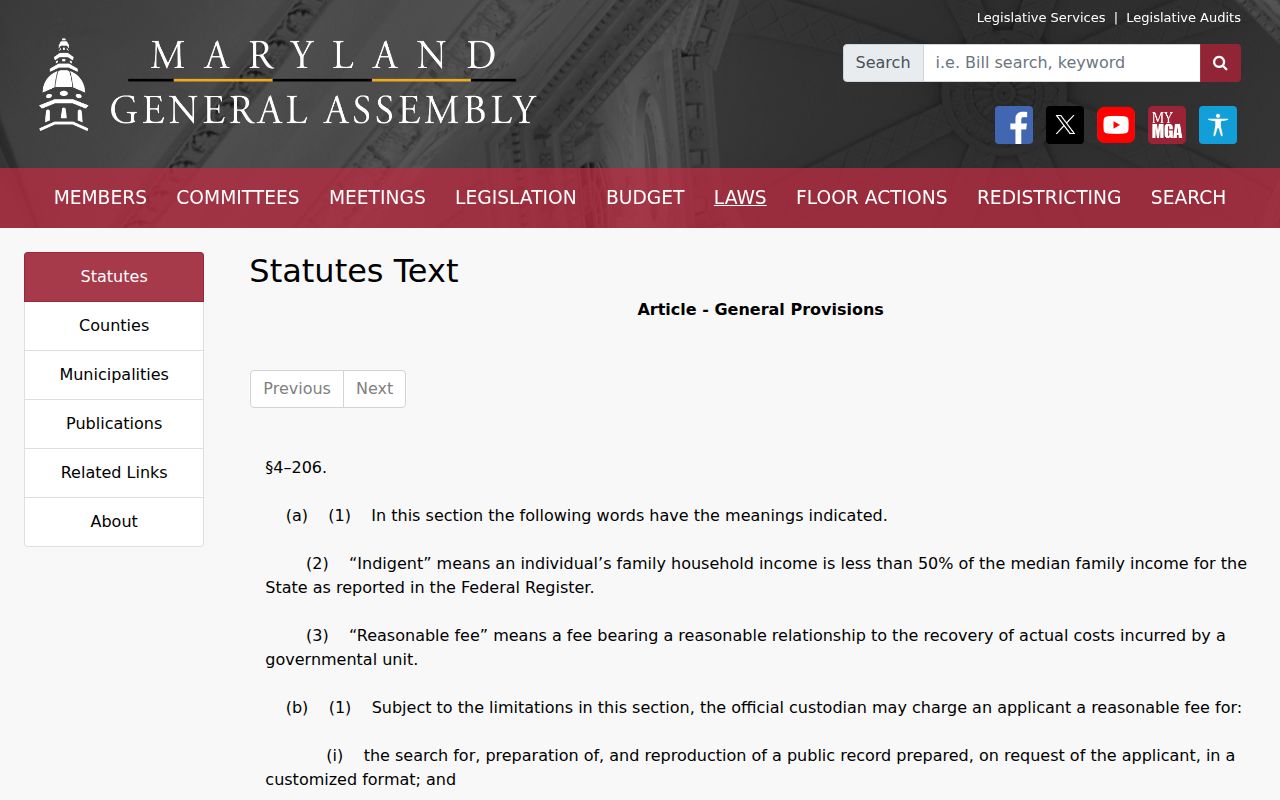
Section 4-206 bars charges for the first two hours of search and preparation. After that, reasonable actual costs may apply. Frame requests narrowly. A date-bounded address record or a named index entry works far better than asking for every past resident of a street.
Howard County Previous Residents Deed Chain
A deed chain traces owners, not occupants. That distinction drives everything. The recorded instrument outranks a tax assessment for the transfer itself. Pull the current owner, account, deed reference, and legal description from SDAT first. Then open the deed through MDLandRec. There the buyer appears as the grantee and the seller as the grantor. Many deeds cite a prior book/page. That citation is often more dependable than a street address. Older instruments may describe a subdivision, lot, tract, or metes-and-bounds call instead.
- Copy the SDAT account, current owner, deed reference, and full legal description for the target parcel.
- Search the book/page in MDLandRec or search the current owner as grantee to locate the acquisition deed.
- Record the grantor, grantee, recording date, consideration, parcel description, and every prior-deed or plat reference.
- Search that seller as a grantee to find the earlier acquisition, while keeping the legal description and lot or subdivision constant.
- Repeat backward, using Soundex or fuzzy search when a surname changes form, and move to historical or retired indices when the active search fails.
- Cross-check each transition against SDAT transfer history and GIS or plat data before assigning it to the same parcel.
- Grantor and grantee
- The grantor transfers an interest. The grantee receives it.
- Chain of title
- The ordered sequence of recorded transfers affecting a parcel or interest.
- Legal description
- The lot, block, subdivision, tract, or boundary wording that identifies land more reliably than an old street form.
- Criss-cross directory
- An address-first directory that can lead from a street entry to a name entry.
- Enumeration district
- The area a census worker was assigned to visit for one census.
Note: Keep a date-and-book/page log while tracing Howard County previous residents, since a deed's named parties may never have occupied the parcel. Chains prove ownership, not residence.
Howard County Maps Date Addresses
Maps answer questions deeds cannot. The Howard GIS Interactive Map layers historical land grants over aerial imagery. The imagery runs from 1943 through 2025. Plats fill another gap through the Maryland State Archives Guide. It lists Howard plat series for 1945-1993 and 1945-2023. For Ellicott City, the Library of Congress and Maryland State Archives hold Sanborn maps. Those sheets date from 1887, 1894, and 1910. A Sanborn sheet shows footprint, use, materials, stories, hazards. It still cannot name every person who slept there. For dates and place-name context, the Maryland historical chronology for Howard County is the reference to consult.
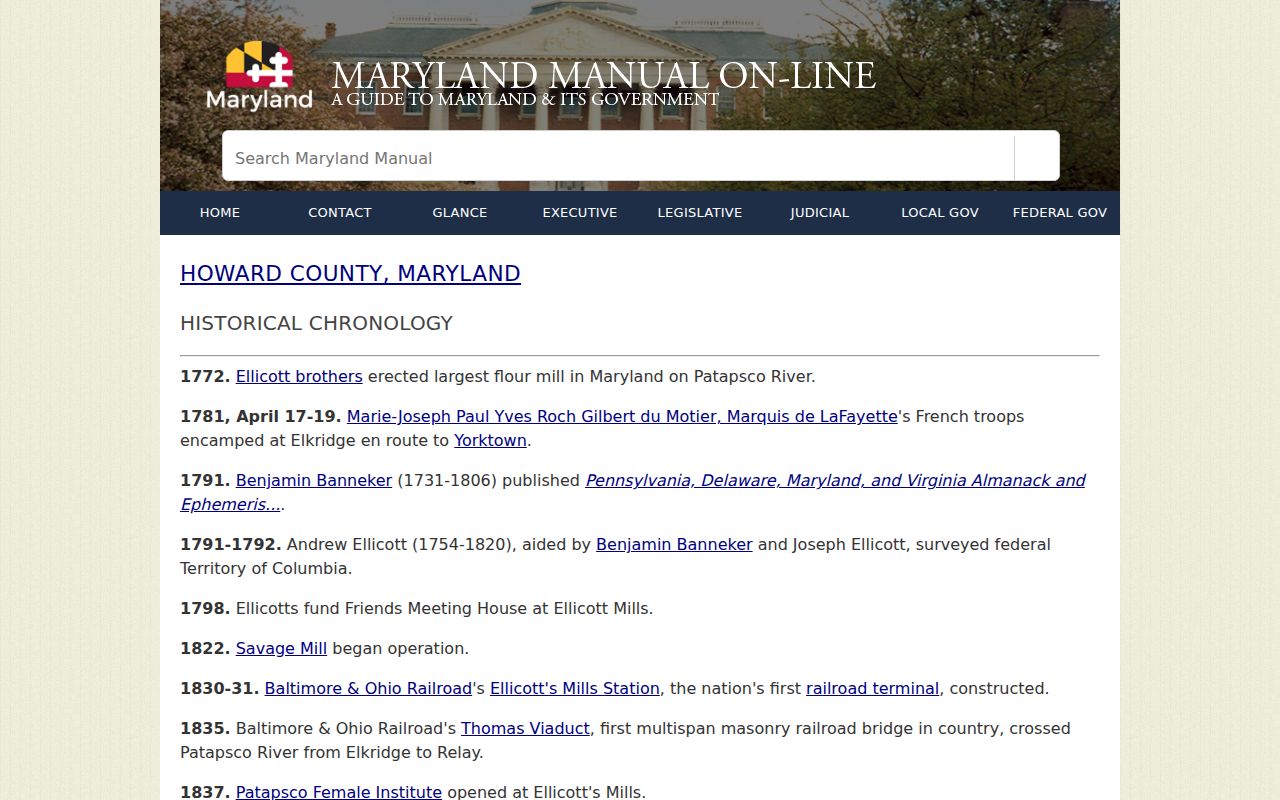
Always date-check the map against the deed, permit, and census year. A structure on a map proves context, not identity. People come from other records. GIS layers can also show where later subdivision lines or road alignments diverged from an older legal description.
Howard County Address Name Changes
Howard's older records demand local vocabulary. Howard District was carved from Anne Arundel County in 1838. The county stood on its own by 1851. Ellicott's Mills became Ellicott City in 1867. One old document might therefore say Ellicott Mills, Ellicott City, Howard District, or a rural post-office name.
Place names were shaped by real geography. The National Road, the B&O railroad, Patapsco mills, Columbia villages, and rural tract names all colored how people described where they lived. Disaster adds another wrinkle. Floods struck Ellicott City and Patapsco properties in 1868, and Hurricane Agnes hit in 1972. Never assume a paper record survived in one unbroken run; Archives finding aids and reconstructed indices fill the gaps.
Howard GIS street-centerline data shows modern standardization. The county publishes no countywide renumbering year for any one street. Search both Ellicott Mills and Ellicott City. Keep former postal-place names alive, and let the legal description serve as the bridge, so a place-name change never ends the trail.
Howard County Previous Residents Households
An address holds more stories than its current owners. The Howard County Genealogical Society points researchers toward rich collections: marriages from 1858-1939, voter records from 1865-1940, deeds and mortgages from 1850-1960, funeral records from 1930-1950, yearbooks from 1839-1955, and social registers from 1892-1981. For past residents of Howard County, those materials open doors a modern directory cannot. HCHS and the Miller Branch Historical Center serve as the local reference path for all of it. A criss-cross directory, where one exists, works backward from an address. It then points you to the alphabetical name section for fuller detail.
Pair a directory entry with the nearest census you can reach. Start with the address or street. Add household members next. Ages, relationships, birthplaces, and later record events follow from there. Full descriptions of these holdings sit on the Howard County city directories page. When a trail ends in a death or a property transfer, probate records can name a decedent, personal representative, attorney, or heirs. A funeral or obituary source may then reveal a family connection or a former address for your Howard County resident lookup.
- Place the address in the proper time period using the deed, map, or permit sequence.
- Check a local directory-related source or historical voter material for the same address or surname.
- Compare the result with the closest public federal census year and record household relationships separately from ownership.
- Use probate, cemetery, funeral, or obituary material to test a later move, death, or inheritance event.
Howard County Previous Residents Archives
Digital searches run out eventually. Howard County has a concrete fallback chain. The Clerk of the Circuit Court keeps land records and provides copies. It will not run title searches or offer legal advice. The Maryland State Archives preserves older paper and retired index material. Miller Branch offers public computers plus its Historical Center partnership. That partnership includes the Howard County Historical Society Archives Center, a collection of more than 50,000 objects, photographs, archives, and library items. Reference staff can help locate a finding aid. That matters when the evidence sits outside any web index. The Howard County series guide lists historical material for the county. It covers voter, plat, patent, and Register of Wills records.
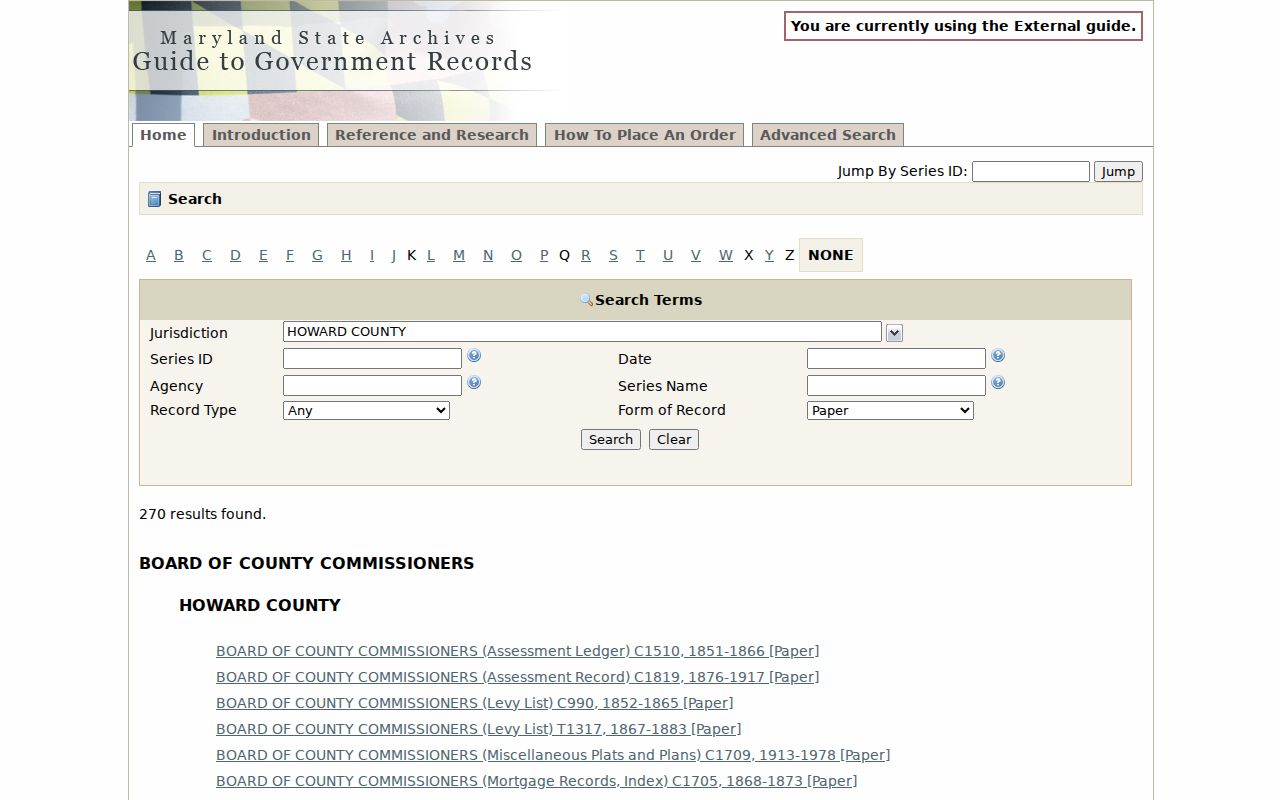
Use the guide to identify a record group before any counter or archive request. It pays off most for a parcel predating the active index. Estate trails benefit too. It also helps with older Register of Wills files that anchor a family search. The Maryland State Archives FAQ explains its custody role and historical-order guidance.
Vital records carry their own access rules. A historical index offers a research lead, but a recent certificate involves separate eligibility rules and a different custodian.
Howard County Previous Residents Limits
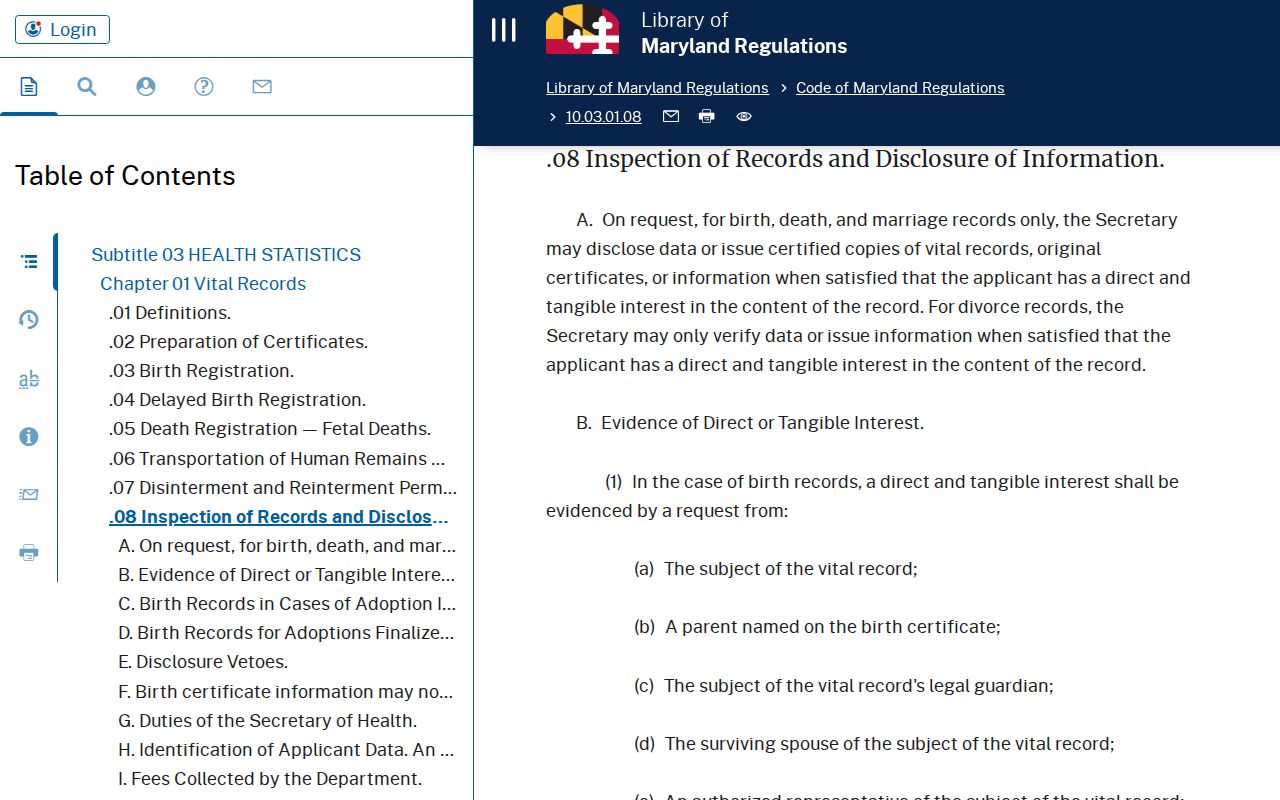
Prior-address research has firm limits. A deed names the parties to an ownership transaction. It cannot prove who actually slept at an address. A tax-card mailing address may point to a business, a representative, a post-office box, or a family contact. A permit applicant might be an owner, contractor, architect, or agent. Public sources will not reveal utility customers, protected voter addresses, unpublished association members, or every person tied to a parcel. Treat any unverified name as a lead. Test it against records from more than one custodian. The Maryland vital-record access regulation describes the direct-and-tangible-interest rules for current certificates.
Some addresses are shielded by law. Maryland Safe at Home participants and people with qualifying court confidentiality protections may have protected locations. Use prior-address research for family history, estate questions, record correction, or personal curiosity, and never to stalk, harass, threaten, or harm a living person.