
Howard County Resident Lookup Records
A single name proves little on its own. Reliable identification comes from records that each document a different fact. SDAT ties an owner to a tax account and a parcel. Case Search lists a public slice of court matters. The State Board of Elections tool lets an individual retrieve their own registration details. A deed names the parties to a transaction. Vital records can document a life event. They follow separate access rules, though. Read each record only for the fact it truly supports.
| Record | What It Confirms | Where | Access |
|---|---|---|---|
| SDAT parcel card | Owner or account connection, premises and mailing addresses, deed reference | Maryland SDAT Real Property Search | Free public search |
| Recorded deed | Grantor, grantee, recording details, legal description, and book/page | MDLandRec and the Howard Clerk | Account online or counter access |
| Case record | Party role, case number, dates, type, and public disposition | Maryland Judiciary Case Search | Public subset only |
| Voter record | A person’s registration, polling, and district details after an exact match | Maryland Voter Lookup | Identity-gated tool |
| Vital record | Birth, death, marriage, or divorce facts when the requester qualifies | Maryland Division of Vital Records | Varies by record and date |
Begin with the record closest to your question. An ownership question points to SDAT and the deed. A public court lead belongs in Case Search. Family-history work may travel from an obituary or estate docket to the Archives, and the lookup grows stronger when two independent custodians point to the same name, place, and period.
Howard County Resident Lookup Courts
Case Search works well as a second comparison point. Pick the Person/Company search option. Then narrow by Howard County, party type, court system, case type, or a filing-date range. Exact names became the default in 2021. A partial surname may take a trailing percent sign. Skip percent signs at the start or middle. Circuit civil data begins April 23, 1997, and Circuit criminal data begins May 4, 1999. The public display caps at 500 results, so broad surnames need a first name, date, court, or case-type filter to stay under it.
The Maryland Case Search FAQ spells out the searchable fields and the Howard coverage rules.
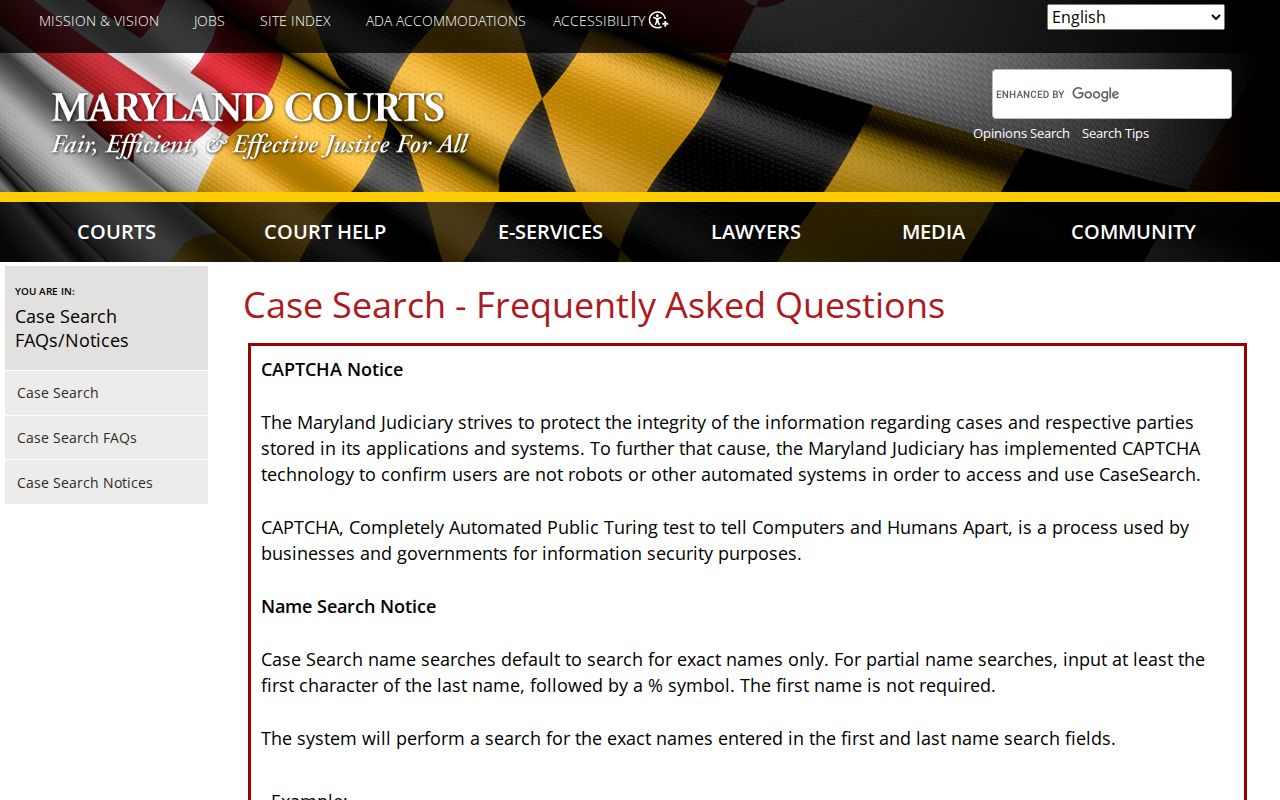
A court listing in a residents directory is only a lead. It is never the last word on a person. Sealed, shielded, expunged, juvenile, and adoption files may be missing or shown in limited form. A blank result can simply mean no electronic record is open to public inspection. Use the Howard court directory to find the court seats. It covers the Circuit, District, and Orphans' Court inside the county complex.
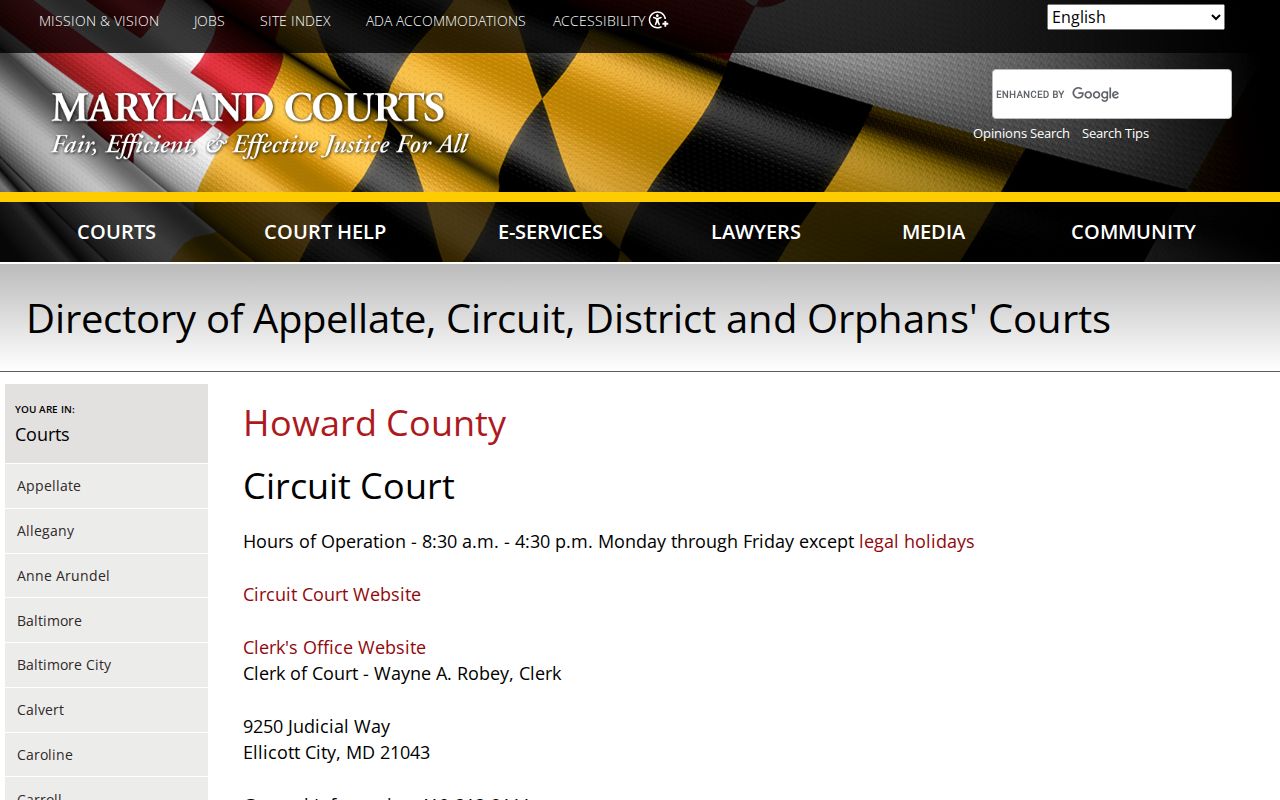
Files absent from the online system still exist. The clerk accepts requests in person or in writing. A phone call can point you to the right office, though it cannot substitute for the request itself.
Howard County Voter Lookup Details
Maryland Voter Lookup is not a public roster for a street or a neighborhood. It demands exact inputs. You need a first name, last name, date of birth, five-digit residential ZIP, and street number. A middle initial is optional. The result returns a voter's own registration, polling place, districts, and ballot tools. A failed match has many innocent causes. Think former names, nicknames, a prior ZIP after a move, a recent update, or a protected record. Data refreshes daily. Still, a new online or MVA change can take three weeks to appear.
The tool fits only someone with the exact inputs for their own record, so it cannot lawfully replace a Howard County list of who lives near an address. Maryland registration data mixes public and confidential elements. Safe at Home participants may use a substitute address.
Howard County Vital Record Lookup
Vital records can separate same-name people. The path depends on record type and age. The Maryland Department of Health handles current birth, death, marriage, and divorce-verification requests. The Howard County Circuit Court Clerk issues marriage licenses and certified local copies. Older material transfers to the Maryland State Archives. Archives restrictions run 100 years for births. Deaths close for 20 years. Marriages and divorces stay restricted for 60. Recent certificates also require direct and tangible interest under Maryland rules.
The Howard marriage-license instructions walk through the county counter process and the certified-copy route.
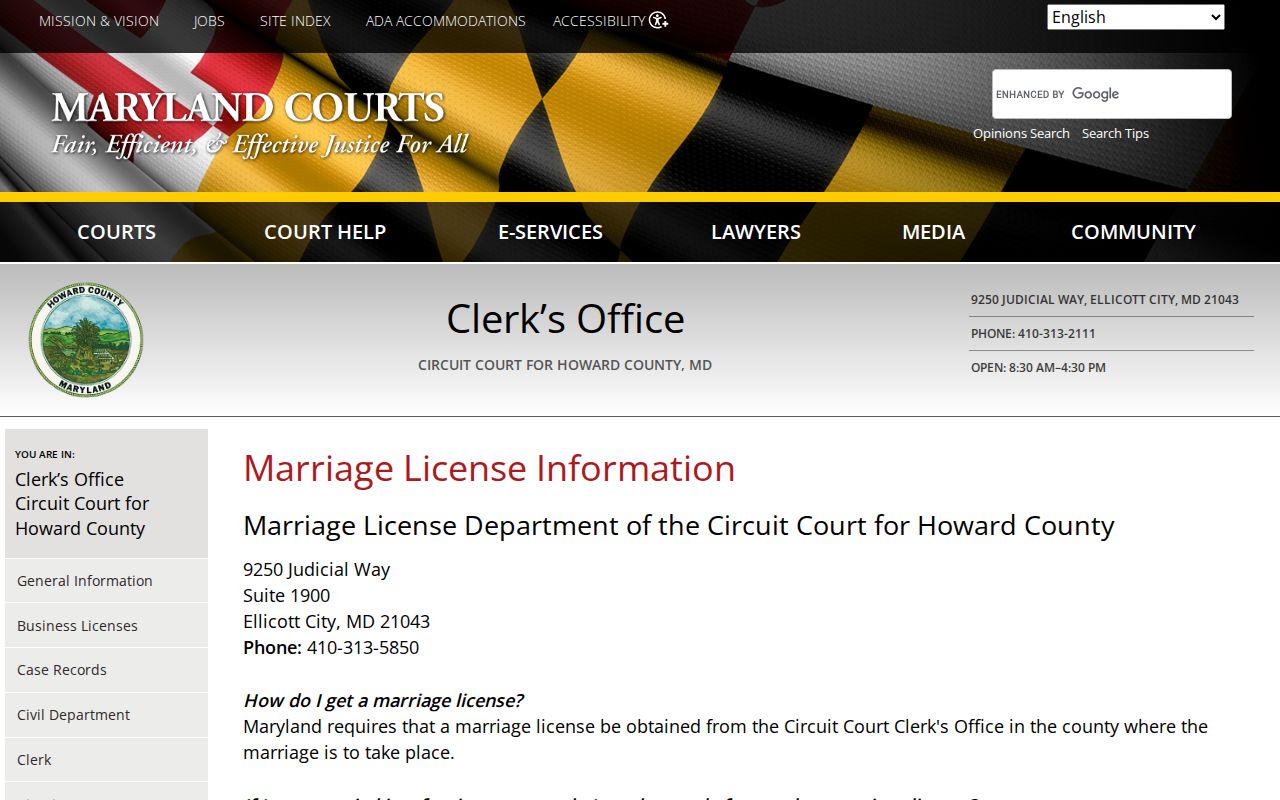
A marriage license unlocks no extra personal data. The Clerk's material covers the application details, the waiting period, and the copy method. The proper custodian decides each request.
The Maryland vital-record fee page lays out the state's certificate and payment information.
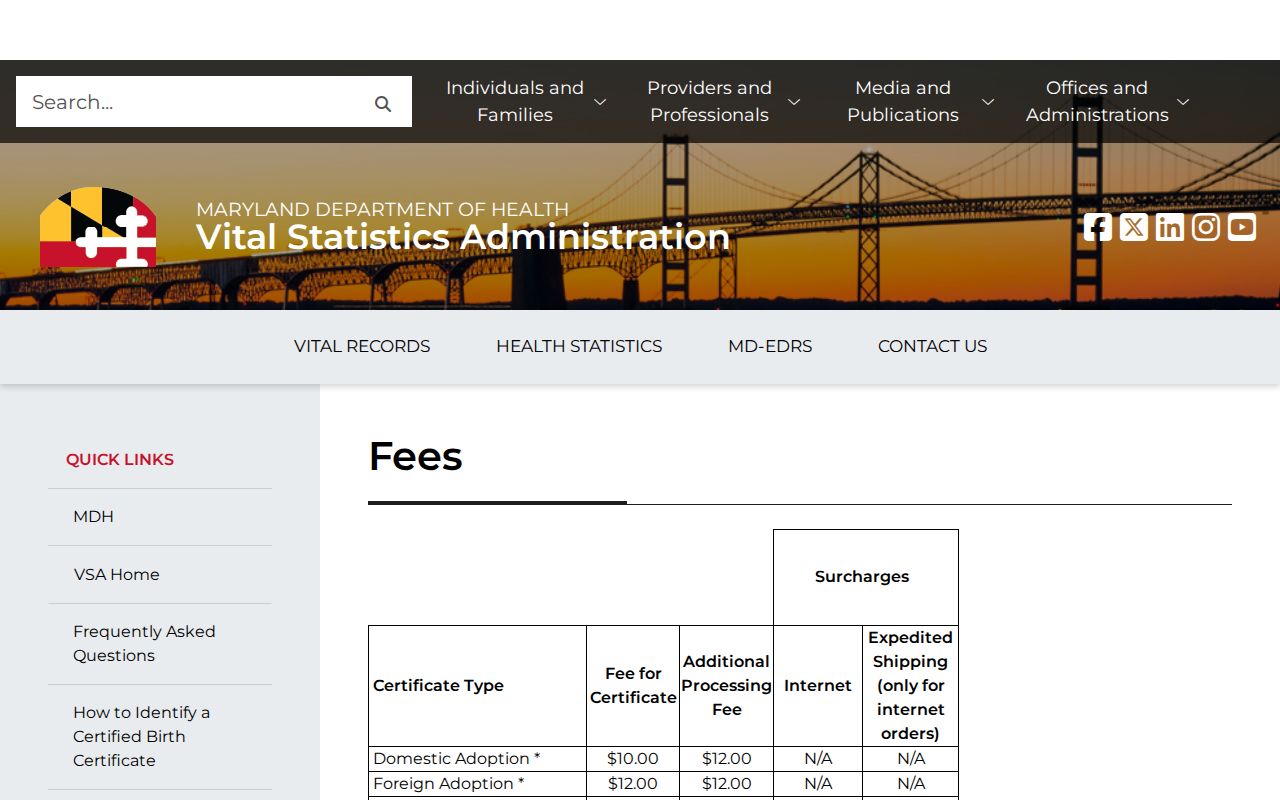
State fees and processing rules follow the request type. Confirm the live form before ordering. An index entry, an uncertified record, and a certificate are distinct products with different proof requirements.
Verify a Howard County Resident Lookup
Treat verification as a chain, not one database hit. Save the exact spelling first. Capture the middle initial, suffix, any former name, and a realistic date range. Then compare records created for different reasons. A parcel card anchors an ownership connection. A deed ties that parcel to named parties. A court or estate record can then add a date and a role to the picture. The SDAT mailing address may belong to an agent, a business, a post-office box, or a family contact, so it does not prove anyone lives at the premises address.
- Search a full name in Case Search, select Howard County where useful, and narrow a broad result before reading individual entries.
- Check SDAT for an owner-name match, then write down the parcel account, premises address, mailing address, legal description, and deed reference.
- Open the related deed in MDLandRec and compare grantor, grantee, recording date, and legal description rather than relying on street wording alone.
- When the person is retrieving their own record, use the exact identity fields in Maryland Voter Lookup as a current confirmation point.
- Resolve a conflict with the custodian. Case Search directs correction notices to the court that created the record, while SDAT and GIS corrections go to their own custodians.
- Docket
- A court’s dated list of filings, hearings, and other events in one case.
- Index and image
- An index points to a record. An image is the scanned instrument or document itself and may have separate access controls.
- Certified copy
- A copy issued or authenticated by the custodian for a formal purpose. It is different from a search-screen result.
Note: For Howard County matches, keep the record number and custodian with each result so any error can be checked at its source.
Howard County Property Name Checks
SDAT makes a sensible first stop for property name checks in Howard County. A Howard parcel result there can list owner name, mailing address, premises address, deed reference, legal description, map and grid placement, transfer history, and exemptions. It can also show homestead status. Treat it as an informational record rather than a legal report. One example from the database pairs a Lutherville mailing address with a Resort Road premises address. That premises address sits in Ellicott City. That kind of mismatch is ordinary record geography. It does not prove anyone lives at either spot.
A record sometimes needs a defined formal request. The Howard Circuit Court judicial-record request page gives the local contact route.
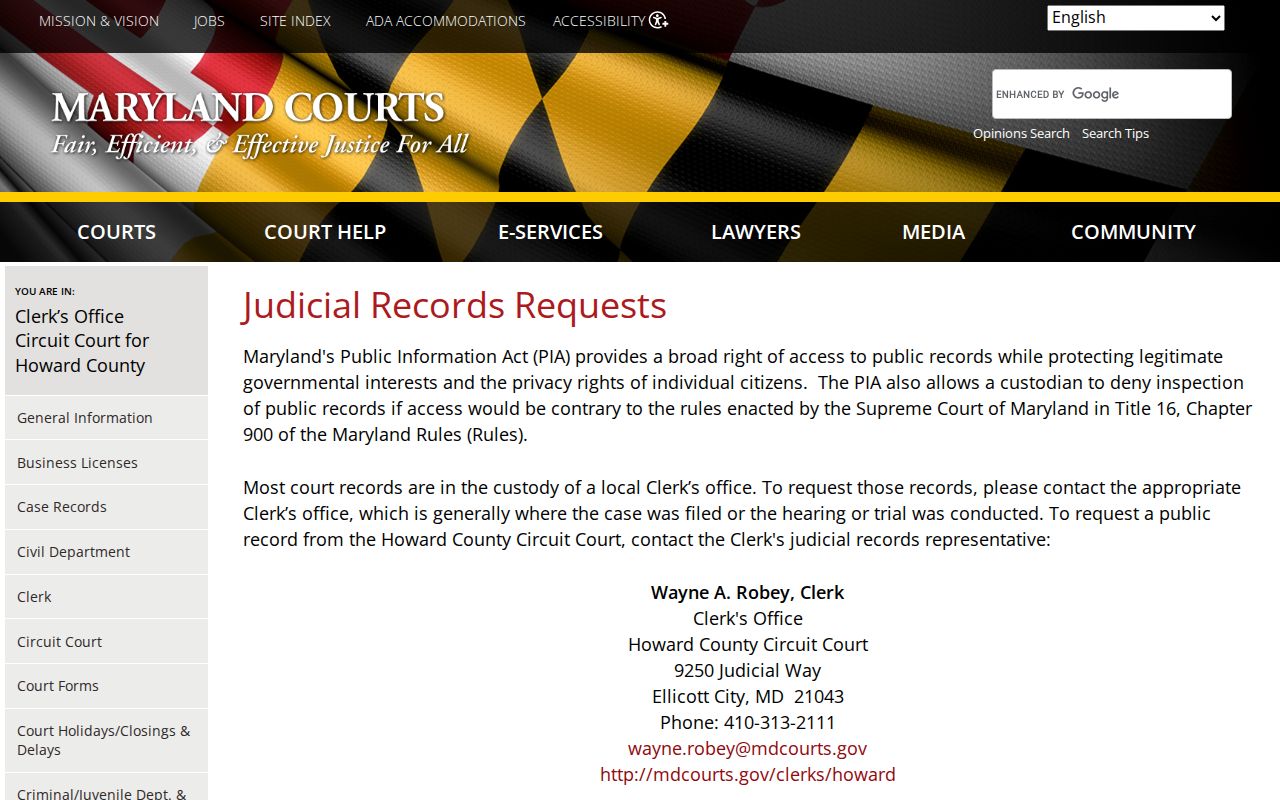
Online trails sometimes end before the question does. In that situation the Howard Circuit Court's judicial-record request channel offers a contact route for a local file. Scope the request narrowly. Ask for a named case or a date-bounded record, not a broad people list.
Howard County Resident Lookup Results
A Case Search hit usually lists party name and role, city and state, case number, filing date, case type, charge or claim, hearing date, disposition, status, and docket history. EstateSearch, part of the Judiciary's public tools for estates dating from 1998 forward, can add a decedent name, estate number and status, death and filing dates, personal representative, attorney, alias, and docket events. Those fields help split apart people who share a surname. They do not turn one screen into a full personal profile.
- Match the party role before assuming the person is the subject of a case.
- Compare filing dates with a known address or family event.
- Use the case number when asking the court for the underlying file.
- Read a disposition as the case outcome, not as a broad statement about a person.
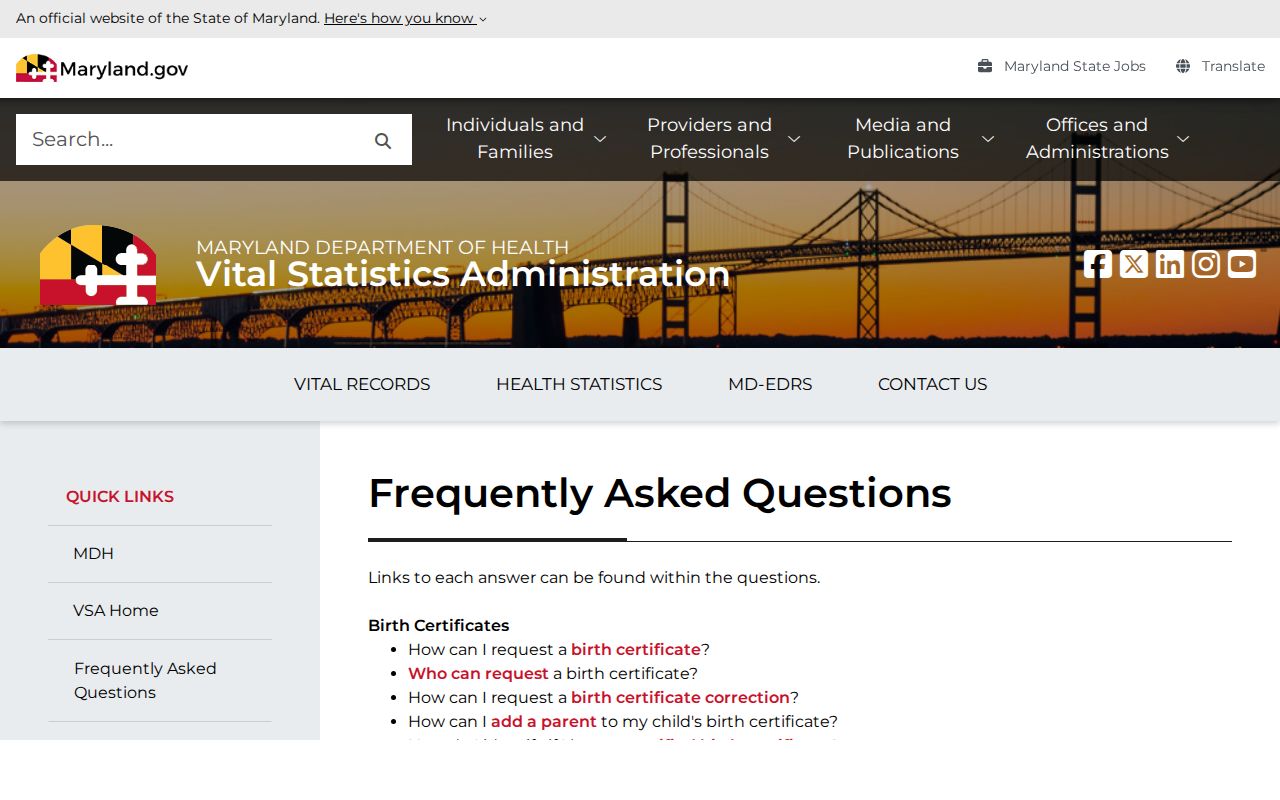
Current vital records follow stricter rules. The Division of Vital Records guidance explains why a request may require identification or proof of a qualifying relationship.
History offers other routes. Probate files, obituaries, cemetery material, and the collections of the Howard County Historical Society and Library can all confirm a past resident. Each is a lead to compare, never a substitute for the custodian record when a formal answer matters.
Howard County Resident Lookup Boundaries
Maryland public records carry real privacy boundaries. The Safe at Home Address Confidentiality Program gives qualifying people a substitute address. It also adds mail forwarding. Protected locations can touch property, deed, GIS, court, and voter research alike. The program's real-property guidance warns participants to notify it before financing, purchase, or recording. That way a shielded address never leaks into the recorder's files. Courts may also withhold addresses in qualifying matters. Never reproduce sensitive identifiers from historic images. Never infer an address from a result that simply comes back empty.
The Maryland Safe at Home program page covers eligibility, substitute-address handling, and disclosure limits. When an official route ends, a carefully scoped Maryland Public Information Act request may fit. It works for a defined county record set. Under Md. Code, General Provisions §§4-101 through 4-601, the normal response expectation is 30 days. The first two hours of search and preparation are not chargeable under §4-206.